| Keep up-to-date with us and what's happening in the education sector |
|
|
We are pleased to report that several 2025 Annual reports have already been sent to the auditors, and we are working hard on completing the remainder of our schools by the deadline of 31 March.
If we require any additional information from you, we will contact you. To avoid any delays, it would be appreciated if you could provide us with the requested information as soon as possible.
Should you have any questions in the meantime, please contact the team on (04) 909-7729 or send us an email to admin@afsl.nz. |
|
|
2026 Confirmed Staffing: The confirmed rolls and staffing entitlements will be published on Pourato on 26 March 2026. If your roll grows after 1 March, you may be eligible for a staffing roll increase. Please refer to the Ministry of Education website for further information by clicking the button below.
Applications for roll increases can be accepted from 26 March. |
Banking Staffing Final Balance:
Banking staffing final balance letters will be available in the Secure Data Portal on 20 April 2026. These letters will advise your school whether you have a nil balance, underuse, or overuse balance for the end of the year and provides next steps where necessary. For any overuse, the calculated recovery amount will be included in your July Operational Grant payment. Any reimbursements due for Kaupapa Māori and Māori medium education settings will be included in the July operational grant payment.
For more information, click the button below. |
Estimated Pay Equity and Collective Agreement Funding 1 April 2026: On 1 April 2026, your school will receive the next instalment of estimated funding for non-teaching pay equity settlements and collective agreements.
There will also be a letter in the Secure Data Portal towards the end of March outlining the breakdown of this funding. Can you please download this letter and upload it to the 2026 MOE Grants folder in Google Drive.
Reminder: Spend Your Property Maintenance Grant (PMG) One-Off Top-Up:
Property Maintenance Grant (PMG) one-off top-up funding must be spent by the end of the Term 1 2026 holidays. Please make sure any maintenance projects are completed and the funding allocated before this deadline. For more information, click the button below. |
Professional Development Fund for Principal Leadership:
Principals covered by the PPCBU Collective Agreement (or the relevant IEA) can access $6,000 in both 2026 and 2027 for professional learning, in line with the Ministry of Education criteria.
The 2026 payment will be made to schools in late March, based on employment agreement information recorded in Education Payroll as at 3 March.
To view the full criteria, including approved uses of the fund and administrative conditions, click the button below. |
|
|
BANKING REMINDER - ACCESSING HIGHER INTEREST RATES |
If you have any extra funds sitting in your school current account which are not required in the short term, it is a good idea to transfer these funds to your Savings or Call account in order to benefit from the higher interest rates that are now available.
And if you have funds that will not be required for more than three months you could also consider putting these on term deposit to earn even higher interest. |
| |
|
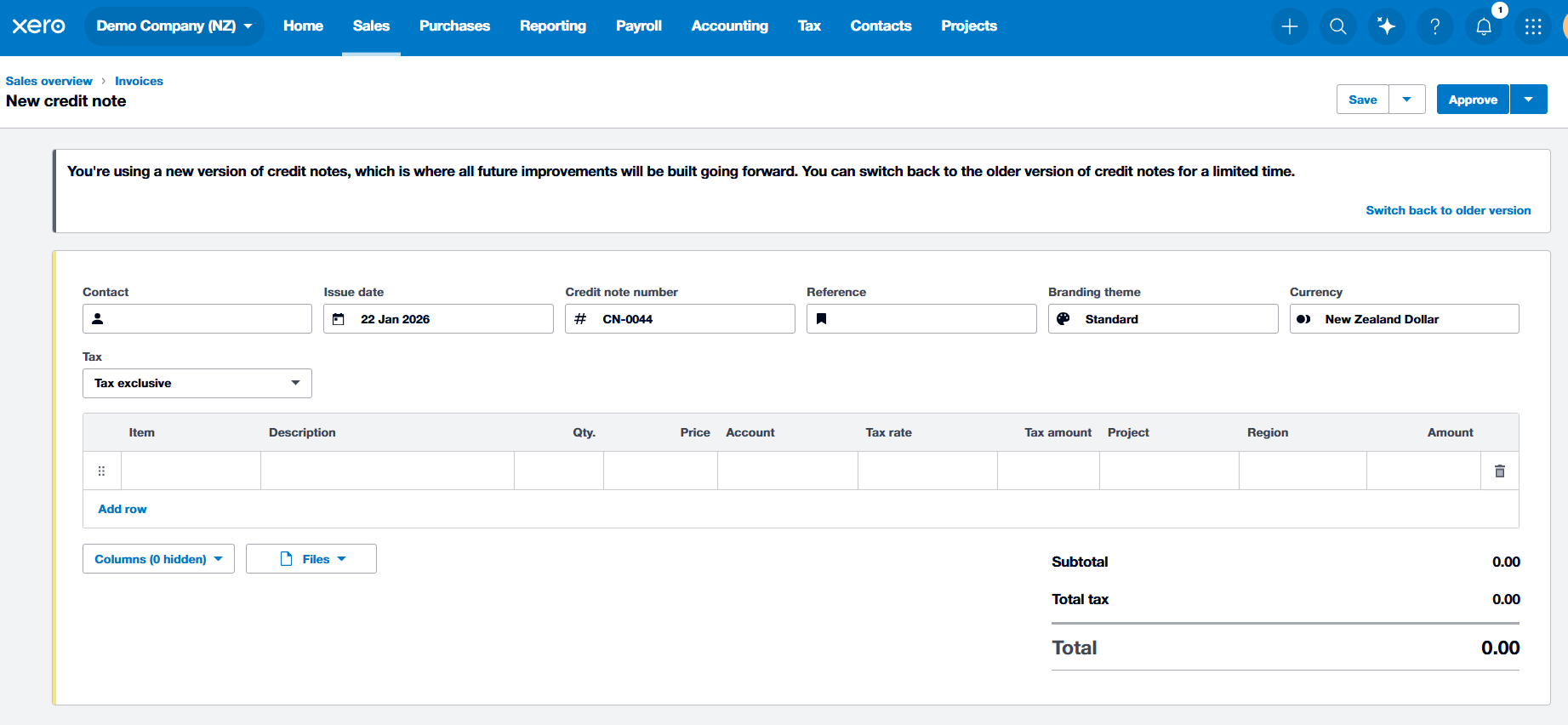
XERO TIP OF THE MONTH: SAVE TIME WITH XERO'S NEW CREDIT NOTE DESIGN |
Good news! Xero has just introduced a fresh new look for credit notes, bringing the design and navigation more in line with the invoicing experience you’re already familiar with. The updated layout makes creating and reviewing credit notes feel more intuitive, with clearer history details, improved feedback when errors occur, and a smoother data‑entry experience overall. For schools, this makes handling refunds for camps or activities, correcting overpayments from parents, or recording supplier credits easier - all while maintaining a strong audit trail. What’s different: - Manual Save: Credit notes now need to be manually saved, giving you more control.
-
Protected Paid Credits: Paid credits are protected to ensure your audit trail stays accurate.
- Detailed History: You can now see more granular detail in the 'History' section, making it easier to track exactly what changes were made and by whom.
-
Improved Error Messages: No more guessing! If something is missing, the new error messages tell you exactly what’s needed so you can approve notes faster.
- Keyboard Efficiency: For the power users among you, the tabbing and data entry experience is now much more efficient.
To explore the updated experience, simply go to Sales > Invoices and select ‘New Credit Note’. You’ll notice the interface is cleaner, and allocating credits across one or multiple invoices is straightforward. |
LONG-TERM INVESTMENT STRATEGIES FOR SCHOOL RESERVES |
| |
School reserves are more than just a safety net - they’re a vital tool to ensure financial stability and fund future initiatives. Managing these reserves effectively requires a long-term perspective and a clear strategy. Why Long-Term Planning Matters: Reserves give schools the flexibility to: - Invest in infrastructure or technology upgrades.
-
Smooth out cash flow during low-income periods.
- Support unexpected expenses or emergencies.
|
| |
|
Key Investment Strategies: - Define Your Goals: Understand what the reserves are for- capital projects, emergency funds, or future programs. The purpose will shape your investment approach.
-
Assess Risk Tolerance: Schools typically need a conservative approach. Consider low-risk options such as term deposits, government bonds, or high-interest savings accounts.
-
Diversify Investments: Even within conservative options, spreading funds across different products can help reduce risk.
-
Monitor and Review: Regularly review reserve balances and investment performance to ensure they align with your goals and the school’s changing needs.
-
Seek Professional Advice: Financial advisors can provide tailored strategies to balance growth and security for school reserves.
The Benefits of a Strategic Approach
A well-planned investment strategy maximises returns while protecting the school’s financial future. By planning ahead, schools can fund essential programs, weather unexpected financial pressures, and maintain long-term stability.
At Accounting for Schools, we help school leaders develop clear, effective strategies for their reserves - ensuring funds are secure, productive, and aligned with your long-term vision. |
|
|
271 Willis Street, Wellington 6011 |
|
|
|