Keep up-to-date with us and what's happening in the business world |
|
|
|
- Will Your Cash Flow Carry You Through the Festive Season? - Important Notices - Xero Tip of the Month: Stay On Top of Payments With Invoice Reminders - Christmas Gifts and Staff Celebrations: What Can You Claim? - Tax Question of the Month: A Small Purchase - An Easy GST Claim to Miss - IRD Upcoming Tax Payment Dates |
|
|
|
The festive period looks different for every business. You might be gearing up for your busiest trading period, preparing to close for a few weeks, or expecting things to slow down while customers are away.
Whatever the coming months hold, a little planning now can help keep your cash flow on track. Regular expenses continue when income slows, while a busy season can mean paying for stock and extra staff before the money from sales reaches your account. November is a good time to look ahead. Here are five steps to help you prepare.
1. Map out what’s coming in and going out:
Prepare a simple cash flow forecast for December, January and February. Include expected customer payments alongside wages, supplier bills, rent, loan repayments and tax. Focus on when money is likely to reach your bank account, allowing for seasonal changes in trading and customer payment patterns. Check the due dates of outstanding and upcoming supplier invoices so you can arrange payment on time. 2. Get your invoices moving:
Follow up overdue accounts and send invoices promptly. Check whether customers have payment processing cut-offs before Christmas so you can get invoices to them in time. Review your work in progress too — are there jobs you can complete and invoice before the holiday period?
3. Prepare for seasonal costs, staffing and payroll:
Factor in extra stock, additional staffing, holiday pay and any planned bonuses, gifts or Christmas functions. Check stock levels and supplier delivery dates so you have the materials or goods needed to complete work and meet demand.
Confirm staff leave and rosters early so you have enough cover for the days your business will be operating. If you or the person responsible for payroll will be away, arrange staff pay runs in advance so everyone is paid on time.
4. Keep tax money set aside:
Some of your bank balance may already be needed for GST, PAYE or other tax obligations. Include the payments that apply to your business in your forecast and keep those funds set aside, so they’re available when needed.
5. Act early if the numbers look tight:
If your forecast shows a cash shortfall, take action now. Following up payments, reviewing the timing of non-essential spending or discussing funding needs early can give you more options. Keep your forecast updated as sales, costs and payment dates become clearer.
We’re here to help
Whether you’re heading into a busy summer or a quieter few weeks, we can help you work through the numbers and plan ahead. Get in touch with the All Accounted For team on 04 970 1182 - we’re here to help you manage your cash flow with greater confidence. |
|
|
|
Plan ahead for January - Manage your provisional tax with TMNZ:
For many businesses with a 31 March balance date, the second provisional tax instalment is due on 15 January 2027. With holiday pay, seasonal spending and changes in customer payments, January can put extra pressure on cash flow.
Tax pooling through Tax Management New Zealand (TMNZ) may give you more flexibility. As a registered tax pooling intermediary, TMNZ offers options to spread provisional tax payments or defer payment to a later agreed date, helping you align tax payments with your business’s cash flow.
Interest or finance costs apply. Provided the arrangement meets the relevant requirements and deadlines, tax pooling can prevent Inland Revenue interest and late payment penalties on the tax covered.
If you’re concerned about your January payment, get in touch with the All Accounted For team before the Christmas break. We can review your tax position, explain the costs and help you decide whether TMNZ is suitable for your business. |
|
|
XERO TIP OF THE MONTH: STAY ON TOP OF PAYMENTS WITH INVOICE REMINDERS |
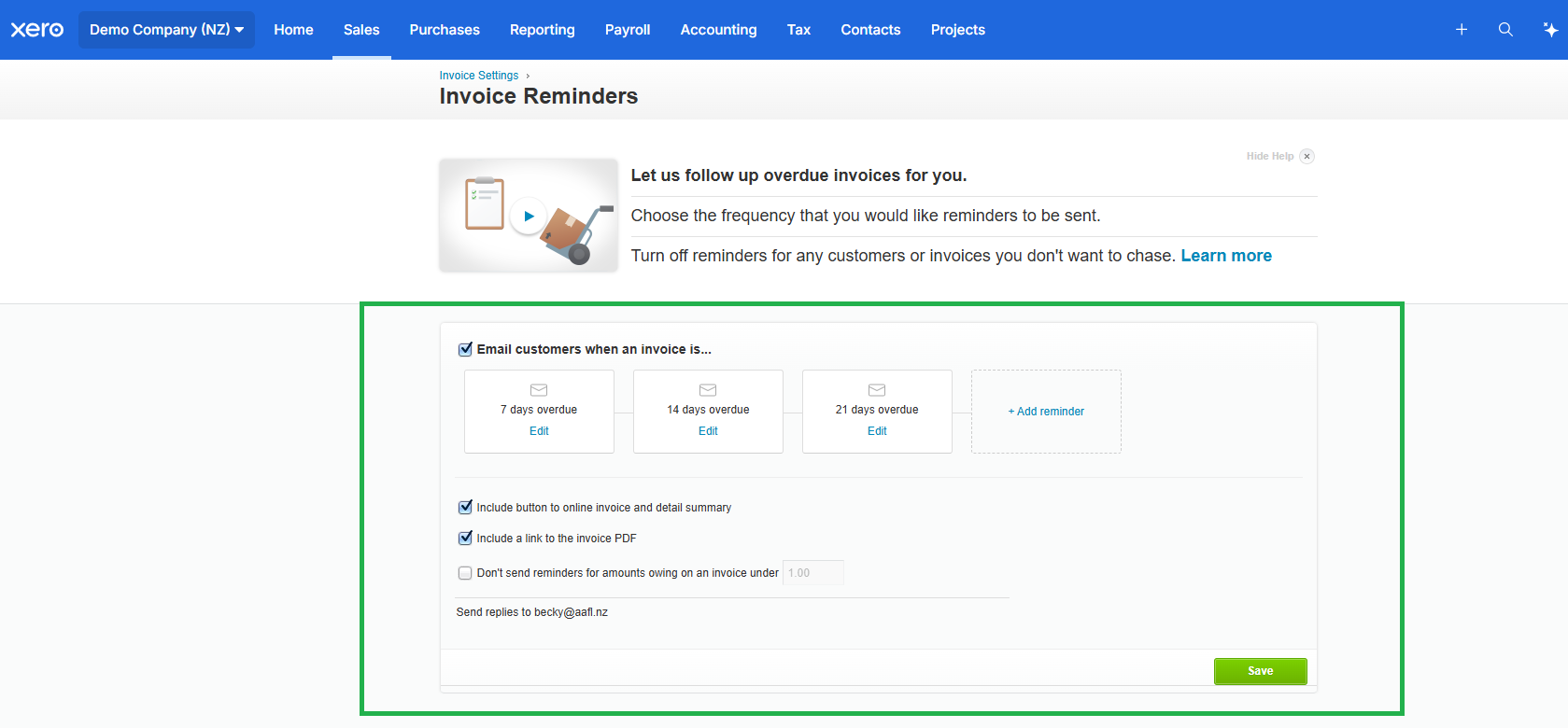
Following up unpaid invoices can slip down the to-do list when things get busy. Xero’s automatic invoice reminders can help by sending customers a friendly prompt before or after their invoice is due.
We’ve shared this feature before, but with the Christmas period approaching, it’s worth another look. Whether you’re new to invoice reminders or already using them, now’s a good time to check your settings and make sure they’re working for your business. How to set up or review your reminders - Go to Sales → Invoices.
-
Click Invoice Reminders: On or Invoice Reminders: Off, depending on your current settings.
- To turn reminders on, tick Email customers when an invoice is…. If it’s already ticked, leave it selected.
-
Click Edit beneath a reminder to adjust its timing and email wording, then click Save.
- Optional: Click Add reminder to create an additional reminder.
-
Click Save on the main Invoice Reminders page to save any changes.
For reminders to work, the contact must have a current email address in Xero and the invoice must be marked as sent. Already using reminders?
Check that the timing and messages still suit your customers and review any customers or invoices you’ve excluded from reminders. Keep payments up to date
Regularly reconcile customer payments so Xero can recognise invoices that have been paid. This helps avoid sending reminders to customers who have already settled their accounts. A quick review now can help keep invoice follow-ups consistent over summer and reduce the time you spend chasing payments. Need a hand with your settings? Get in touch with the All Accounted For team - we’re happy to help. |
|
|
CHRISTMAS GIFTS AND STAFF CELEBRATIONS: WHAT CAN YOU CLAIM? |
A Christmas lunch with your team or a thoughtful gift for a client is a lovely way to say thank you. But when it comes to tax, not all festive spending is treated the same. What you provide and who receives it can affect what your business can claim. Before you book the celebration or start shopping, here are a few things to keep in mind. |
|
| |
|
Staff Christmas functions:
Food and drink provided at a staff Christmas party in New Zealand are generally 50% deductible for income tax, whether you celebrate at your workplace or head out to a restaurant. Related costs, such as hiring glasses or catering staff, generally receive the same treatment. Holding the function at the office doesn’t automatically make it fully deductible. Gifts for clients:
Business-related gifts of food and drink, such as wine, chocolates or a food hamper, are generally 50% deductible. Non-food gifts, such as flowers or a book, are generally 100% deductible, provided they have a business purpose.
If a gift basket contains both food and non-food items, the costs need to be split. For example, the wine and cheese would generally be 50% deductible, while the tea towels and soap could be fully deductible.
Gifts and vouchers for staff:
Staff gifts have different rules from client gifts. Non-cash gifts, including food hampers staff take home, may fall under fringe benefit tax (FBT) rules. Exemptions can apply, but they depend on the value of the gifts and other benefits provided.
Gift cards and vouchers also need care: depending on the type and how they’re treated, FBT or PAYE rules may apply. Check with us before purchasing if you’re unsure. Keep the details with your receipts: Keep receipts and invoices, and record who received each gift or attended the function, the date and the business purpose. For mixed gift baskets, retain an itemised breakdown where possible. These details help us apply the correct tax treatment. Planning something for your team or clients?
Get in touch with the All Accounted For team before you spend. We can help you understand the tax implications, so you can focus on saying thank you without an unexpected tax surprise. |
|
|
|
TAX QUESTION OF THE MONTH: |
SCENARIO QUESTION:
Sarah is a GST-registered graphic designer who files monthly GST returns on the invoice basis.
In October 2026, she buys printer ink and stationery from a New Zealand GST-registered supplier for $230, including GST. These are used entirely for her taxable business activities. She receives and keeps the required taxable supply information.
While preparing her October GST return in November, she notices that she has not entered this purchase into her accounting software. How much GST can Sarah claim, and when must she file and pay her October GST return? |
ANSWER: Sarah can claim $30 of GST, reducing her October GST bill by that amount. Under section 20(3CC) of the Goods and Services Tax Act 1985, qualifying purchases costing $10,000 or less excluding GST are deductible where acquired:
“for the principal purpose of making taxable supplies.”
Sarah’s purchase costs $200 excluding GST and is entirely for her taxable business, so it qualifies. Her invoice-basis accounting permits the October claim even if she has not yet paid the supplier, provided she holds the required information. Workings: The standard GST rate is 15%; GST within a GST-inclusive price is extracted using 15/115 - not 15% of the total price. |
Sarah must file and pay by Monday 30 November 2026. Section 16 ordinarily requires filing by: “the 28th of the month following the end of the taxable period”. Here, 28 November falls on a Saturday, so Inland Revenue’s next-working-day rule applies. Payment is due with the return.
Practical takeaway for our clients:
Before filing, check for business purchases missing from your accounting records. Sarah should enter the purchase and retain its supporting information; GST records generally need to be kept for at least seven years. The supplier accounts for the corresponding $30 as GST on its sale.
This deadline relates to Sarah’s monthly October return - clients with another filing frequency should check their own taxable period.
Before your November filing, reconcile business purchases against receipts and confirm the return period and due date in myIR. References Goods and Services Tax Act 1985, s 20
Goods and Services Tax Act 1985, s 8
Goods and Services Tax Act 1985, s 2
Goods and Services Tax Act 1985, s 16
GST guide IR375 Mar 2026 at 6
Goods and Services Tax Act 1985, s 23
Goods and Services Tax Act 1985, s 19F
Goods and Services Tax Act 1985, s 75 |
|
|
IRD UPCOMING TAX PAYMENT DATES |
|
|
|
|