|
Keep up-to-date with us and what's happening in the education sector |
|
|
|
- 2025 Annual Accounts - The Final Stretch
- Important Notices
- Xero Tip of the Month: Keep Your Tracking Categories up to Date for More Accurate Reporting
- Welcome to the Team: Abel
- Financial Planning for School Expansion or New Programmes
- Looking ahead
|
|
|
|
With the 31 May 2026 (2 June 2026 this year because of the weekend) statutory filing deadline approaching, many schools annual accounts are now in the final stages of the audit process. At this point, timely responses to any of the final audit queries are key to ensuring everything is completed on schedule. When you receive the annual reports for signing, please ensure that they are signed and returned to the auditors as quickly as possible. If the annual report is still in the final stages of audit review, please have the Principal and Board Chair on standby. We can facilitate electronic signing of the reports if either the Principal or Board Chair are away.
Please also ensure consistency in signing dates across the Principal and Board Chair approval page, and that the Letter of Representation is dated accordingly; all need to be signed with the same date.
After receiving the audited (stamped) annual accounts back from your auditors, please remember to combine the annual accounts, audit opinion, statement of variance, evaluation of the school’s students’ progress and achievement, etc into one document before uploading to the Ministry using the School Planning and Reporting Application. We recommend using tools such as Adobe Writer or ilovepdf.com to combine the documents.
A copy of the final combined report must also be uploaded to the school website. Please refer to Ministry guidelines regarding publication requirements, particularly in relation to redacting signatures and personal information where required. |
Reminder: Submitting your Annual Report
Schools are required to submit their annual report through the School Planning and Reporting Application (SPAR). Guidance on using the system is available within the application.
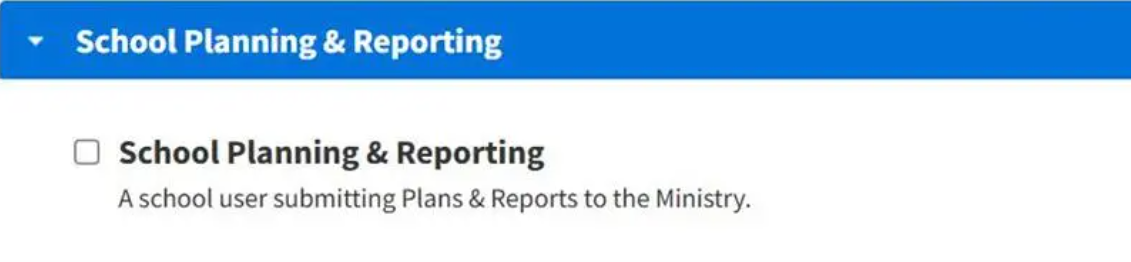
The School Planning and Reporting Application uses your Education Sector Logon (ESL). To gain access, you will need to contact your school’s ESL Delegated Authoriser and request access to SPAR.
Delegated Authorisers will then need to assign the School Planning and Reporting role to users, as shown below. |
Detailed guidance for Delegated Authorisers on how to set up new roles for users, as well as further information about ESL, logging in, and accessing the system, can be found via the links below. |
| |
|
Board of Trustees Meeting Date Changes:
If we prepare monthly management reports for your school, please let us know as soon as possible if there are any changes to your Board of Trustees (BoT) meeting dates. This helps us plan effectively and ensures we continue to meet reporting deadlines. Please advise your Account Manager or our Practice Manager (Chrissy) directly as soon as any BoT meeting date changes are confirmed. Thank you for helping us continue to support your school smoothly and efficiently.
Relief Teacher Transport Allowance Increase:
The Ministry of Education’s temporary increase to the relief teacher mileage rate is now in effect. The updated rate of 0.83c per km applies from 20 April 2026, with payments having commenced from 12 May 2026.
Eligible travel from 20 April is being processed and paid through regular fortnightly payroll cycles. |
|
|
|
XERO TIP OF THE MONTH: KEEP YOUR TRACKING CATEGORIES UP TO DATE FOR MORE ACCURATE REPORTING |
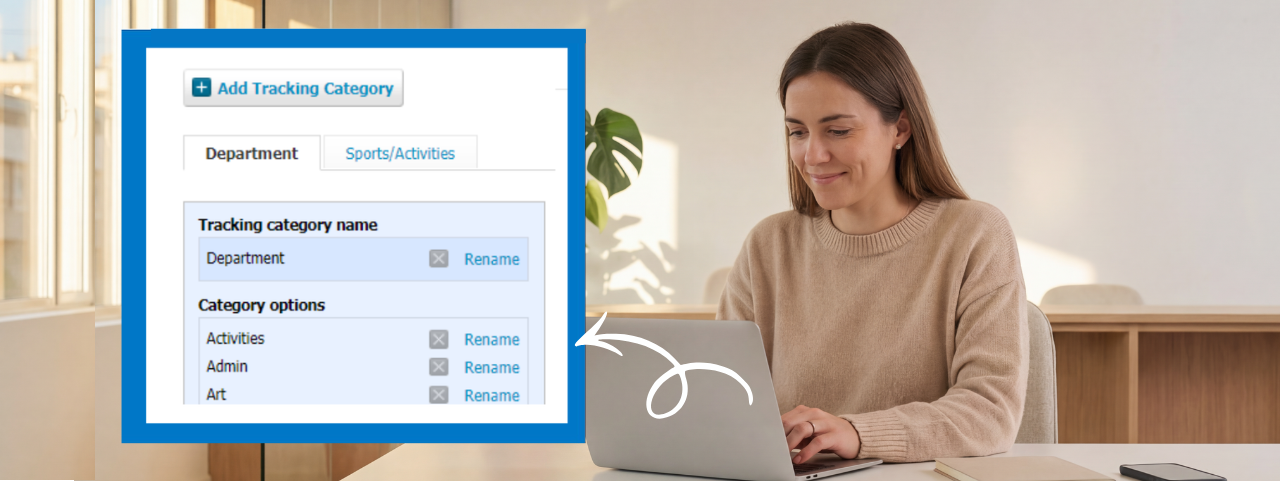
Tracking categories are a powerful tool in Xero for schools, but they only deliver meaningful and accurate reporting when used consistently. As schools evolve throughout the year, tracking setups can quickly become outdated if they are not regularly reviewed.
To ensure your reporting remains accurate and useful, we recommend periodically reviewing your tracking setup to confirm: - New funding streams are being captured correctly
-
Existing departments or activity categories are still relevant
- Reporting continues to align with Board and management requirements
Regular maintenance of your tracking categories helps ensure your reporting remains consistent and reliable for Board reporting and decision-making.
If you would like a refresher on setup, you can refer to our September 2022 Xero Tip - How To Use Tracking Effectively. |
| |
|
WELCOME TO THE TEAM: ABEL |
|
|
|
|
Meet Abel, our newest member of the AFS team, who is looking forward to working with schools and providing practical, insightful, and tailored financial support.
Originally from Kenya, Abel brings a strong background in accounting, auditing, and business advisory, with experience across both public sector finance and client-focused roles.
Before moving to New Zealand, he worked in a range of accounting and audit-related roles, where he supported improvements in governance, transparency, and financial accountability within public institutions. |
|
|
|
Abel holds a Master of Professional Accountancy from Massey University and is a Certified Public Accountant. He enjoys helping schools make sense of their numbers and turning complex financial information into clear, practical insights that support confident decision-making and long-term success. Outside of work, Abel enjoys watching football and is a passionate Arsenal FC supporter. He also has a keen interest in farming and sustainable agriculture. Welcome to the team, Abel! |
FINANCIAL PLANNING FOR SCHOOL EXPANSION OR NEW PROGRAMMES |
|
|
Expanding a school or launching new programmes is an exciting step, but it also brings financial challenges that require careful planning. Strong financial planning helps ensure growth is sustainable, risks are managed, and resources are allocated effectively.
To support successful growth, schools should have a clear financial framework in place before committing to any major expansion decisions. This provides a strong foundation for decision-making, helping leaders assess whether plans are affordable and aligned with long-term financial priorities. The following steps outline how schools can approach effective financial planning. |
|
| |
|
Steps for Effective Financial Planning: |
- Define the Scope and Objectives: Clearly outline the goals of the expansion or new programme, including expected costs, required resources, and anticipated benefits.
-
Develop a Detailed Budget: Estimate all costs, including staffing, facilities, equipment, technology, and ongoing operational expenses. Include contingency funding for unexpected costs.
-
Forecast Cash Flow: Consider how income (such as fees, grants, or donations) will align with expenditure, ensuring sufficient liquidity throughout each stage of the project.
-
Assess Funding Options: Explore funding sources such as school reserves, government grants, sponsorships, or loans, and ensure these align with the school’s overall financial strategy.
-
Evaluate Financial Risk: Identify potential risks, such as lower-than-expected enrolment or increased costs, and plan appropriate mitigation strategies.
-
Monitor and Review: Regularly track spending against the budget and adjust plans where needed to stay on course.
The Benefits of Planning
Thorough financial planning helps schools expand responsibly, avoid cash flow pressures, and ensure new programmes are sustainable and successful. It also provides transparency and confidence for trustees, staff, and the wider school community.
At Accounting for Schools, we support schools with practical financial planning guidance to help make expansion and new programme decisions well-informed and sustainable. If your school is considering growth or new initiatives, please feel free to get in touch with our team. |
|
|
|
271 Willis Street, Wellington 6011 |
|
| |
|