Accounting for Schools
The Chalkboard

February 2026

Keep up-to-date with us and what's happening in the education sector

  • 2025 Annual Accounts
  • Important Notices
  • 2025 Notional Lease Figures Now Available
  • Xero Tip of the Month: Review Your Repeating Bills 
  • Managing Risk in School Finances: Protecting Your School’s Future
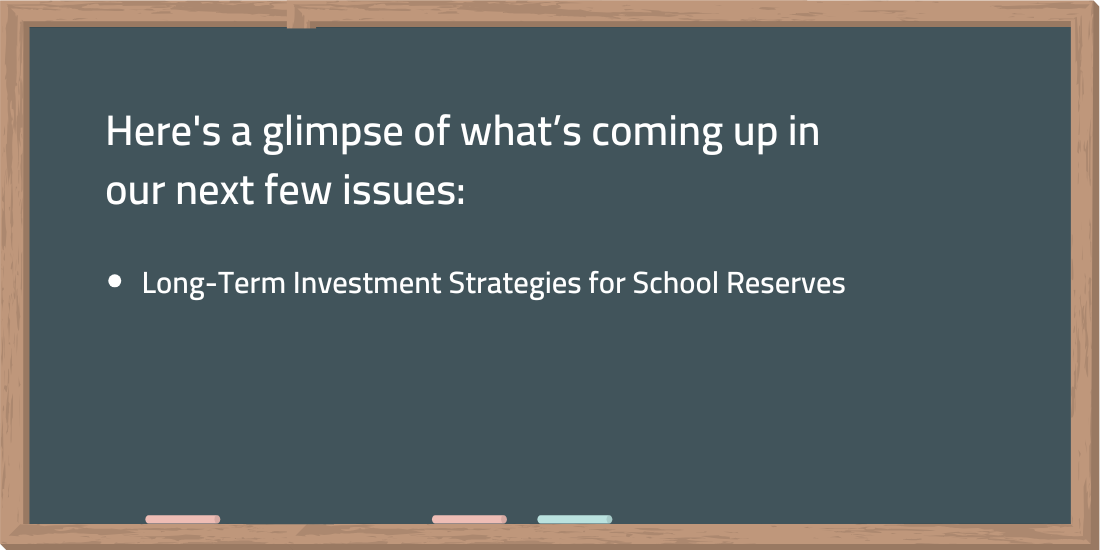
  • Looking ahead
 

Payroll Reports:


The end-of-year School Annual Accrual Report (SAAR) and Annual Leave Liability Reports are available via Edpay, so if you haven't already done so, please can you upload these to the Google Drive 2025 Payroll folder.


Can you also remember to upload a copy of the Board Member list for 2025 (including all members that held office during the year).


If you have any questions, please contact the team on (04) 909-7729 or send us an email to admin@afsl.nz.


IMPORTANT NOTICES

Banking Reminder - Accessing higher interest rates: 


If you have any extra funds sitting in your school current account which are not required in the short term, it is a good idea to transfer these funds to your Savings or Call account in order to benefit from the higher interest rates that are now available. 


And if you have funds that will not be required for more than three months you could also consider putting these on term deposit to earn even higher interest.


2025 NOTIONAL LEASE FIGURES NOW AVAILABLE

The Ministry of Education has released the 2025 notional lease figures for the year ended 31 December 2025. We receive this information directly and will include the required entries in your year-end financial statements, so no action is required from your school.


The notional lease is an accounting entry only. It is recorded as:

  • An expense in the Statement of Comprehensive Revenue and Expense
  • Offset by an equal revenue entry

This means there is no impact on your bottom-line result and no payment is required.


The notional lease amount is calculated by applying 5% (the current Government cost of capital rate) to the value of Ministry-owned school property. This year, the Ministry has adopted a more standardised construction model, which has resulted in some changes to property valuations and, for some schools, a reduced notional lease charge.


If you would like to view your school’s notional lease figure, it is available through the Ministry’s Property Portal. If you have any questions, please feel free to contact our team.


XERO TIP OF THE MONTH: REVIEW YOUR REPEATING BILLS 

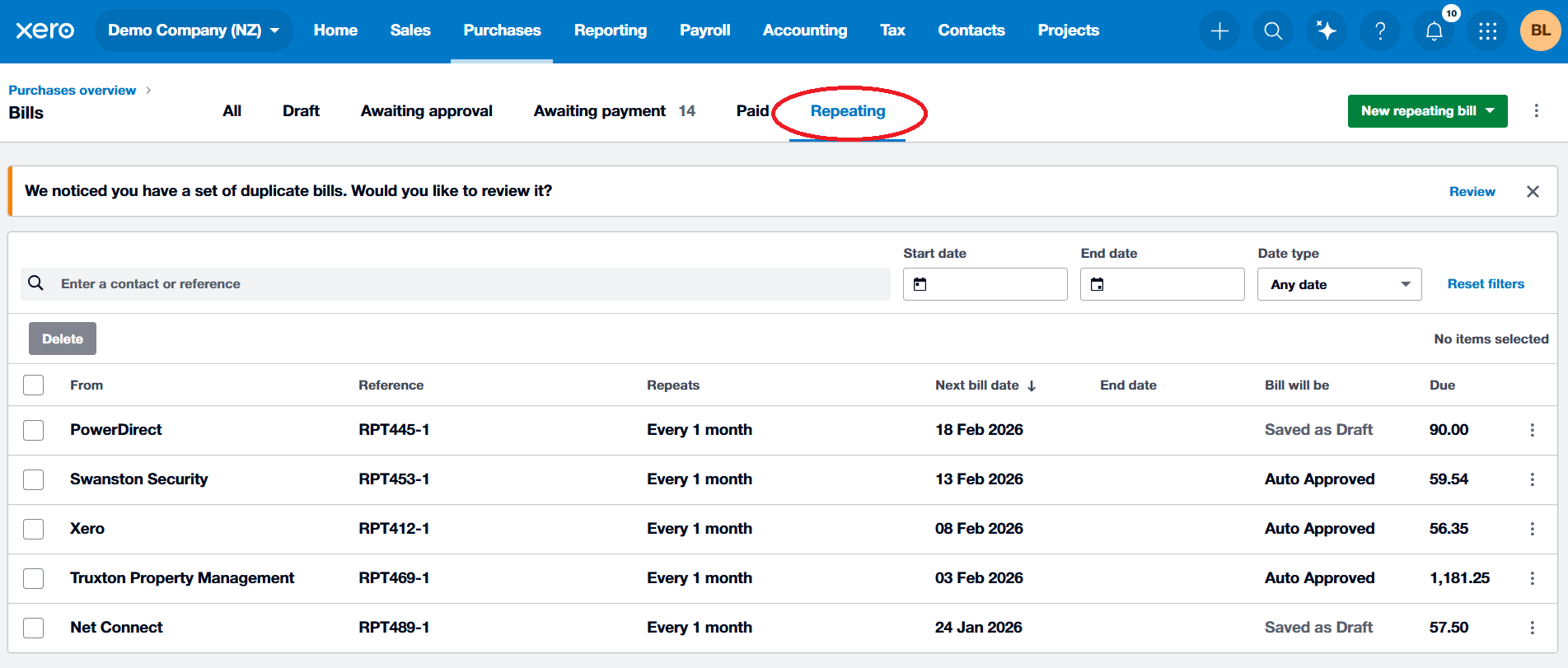
At the start of the school year, it’s a good idea to review your repeating bills in Xero to ensure they’re still accurate and up to date.


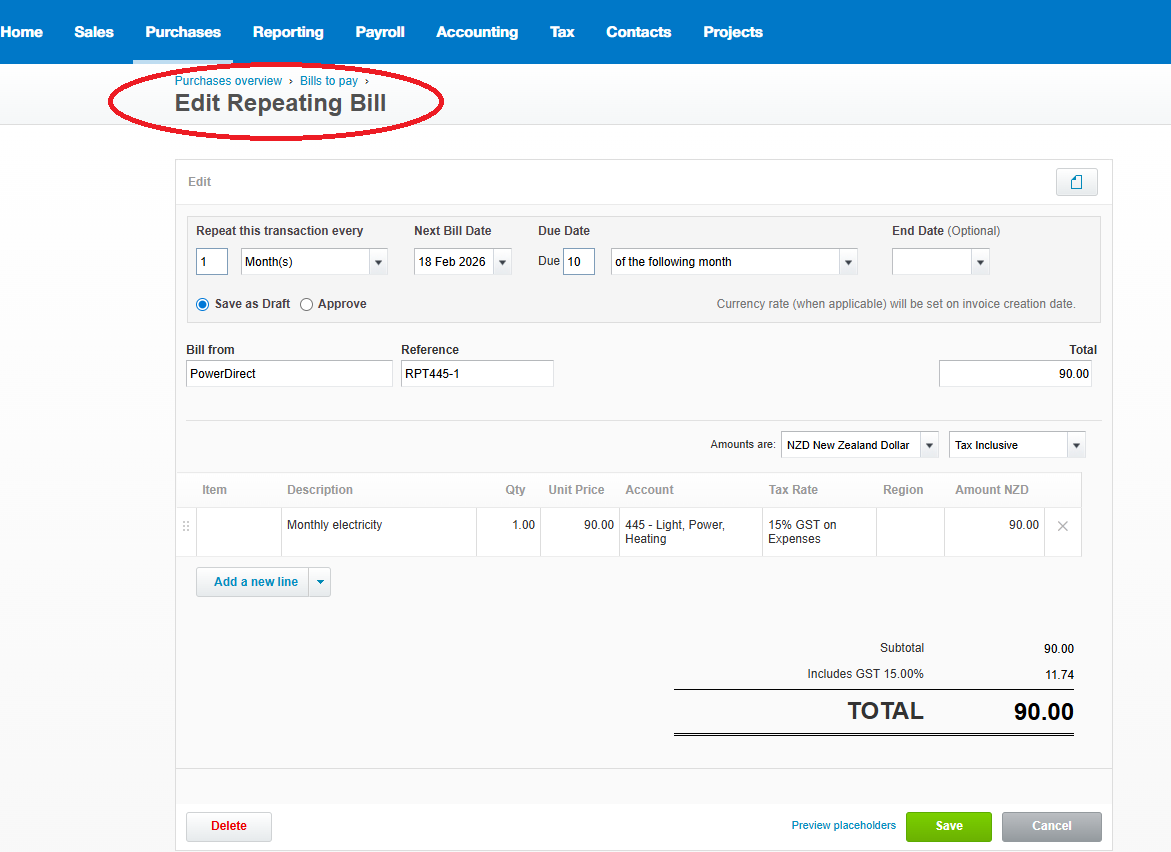
Repeating bills are often created once and then left running in the background. Over time, amounts may change, services may no longer be required, or accounts may need updating. If they aren't reviewed, outdated repeating bills can lead to incorrect expenses and inaccurate reporting early in the year.


Taking a few minutes now to check your repeating bills helps keep your financial information accurate and reduces the need for corrections later. For those who need a reminder, you can find your repeating bills under

Purchases > Bills > Repeating and update or stop any that are no longer needed.


MANAGING RISK IN SCHOOL FINANCES: PROTECTING YOUR SCHOOL’S FUTURE

Financial risk is an unavoidable part of running any school. Unexpected expenses, changes in funding, or compliance challenges can have a significant impact if not identified and managed early.


Proactively managing these risks is key to protecting your school’s financial sustainability and ensuring your resources remain focused on students’ learning and wellbeing.


The following key areas outline practical steps schools can take to identify, manage, and reduce financial risk in a structured and effective way.


Im an image

1. Identify Key Financial Risks: Understanding where your school may be exposed is the first step. Common risks include:

  • Dependence on a single or limited funding source
  • Budget overruns or inaccurate forecasting
  • Cashflow pressures during the year
  • Fraud, error, or misuse of funds
  • Non-compliance with reporting or audit requirements

Regular review by the Board and finance team helps ensure potential issues are identified early.


 2. Budgeting and Forecasting: A realistic, well-planned budget is one of the most effective tools for managing financial risk. Reviewing actual results against your budget throughout the year highlights discrepancies early, allowing you to take corrective action before problems escalate. Scenario planning, such as modelling the impact of reduced funding or unexpected costs, can help you prepare for uncertainty.


3. Cashflow Management and Reserves: Monitoring cashflow ensures that you can meet your obligations at all times. Maintaining adequate reserves provides a buffer against unexpected costs or delays in funding, helping your school operate smoothly even during challenging periods.


4. Internal Controls: Strong internal controls reduce the risk of error, fraud, and mismanagement. Key practices include:

  • Clear delegation of financial authority
  • Separation of duties for approvals and payments
  • Regular reconciliation and review processes
  • Transparent reporting to the Board

Documented policies and procedures also help maintain consistency, particularly during staff changes.


5. Compliance and Reporting: Staying up to date with Ministry requirements, audit obligations, and other regulatory changes is essential. Accurate and timely reporting not only ensures compliance but also supports informed decision-making by your Board.


6. Planning for Uncertainty: Embedding risk awareness into everyday financial practices prepares you for unexpected events. Scenario planning, regular review of policies, and maintaining contingency funds all help reduce surprises and enable confident decision-making.


Managing financial risk is a core part of good school governance. By identifying risks early, maintaining strong controls, and planning for uncertainty, you can protect your school’s financial position and continue focusing on providing high-quality education for your students.


 
 
AFS are a Xero Platinum Partner
AFS are sponsors of NZPF
Go to the AFS website

271 Willis Street, Wellington 6011

P: 04-909-7729  l  P: 0800-275-237  l  

E: admin@afsl.nz  l  W: afsl.nz

Facebook LinkedIn

Unsubscribe