Accounting for Schools
The Chalkboard

September 2026

Keep up-to-date with us and what's happening in the education sector

  • Heads up: 2027 Annual Budget
  • Important Notices

  • Term 3 Finance Check-In

  • Making the Most of Your Monthly Finance Reports

  • Xero Pricing Increase - 1 October 2026

  • Xero Tip of the Month: Use Reference Fields Consistently for Easier Searching
  • Farewell to Nerissa Heyrana
  • Heading to NZPF ICP 2026? Come and Say Hello!

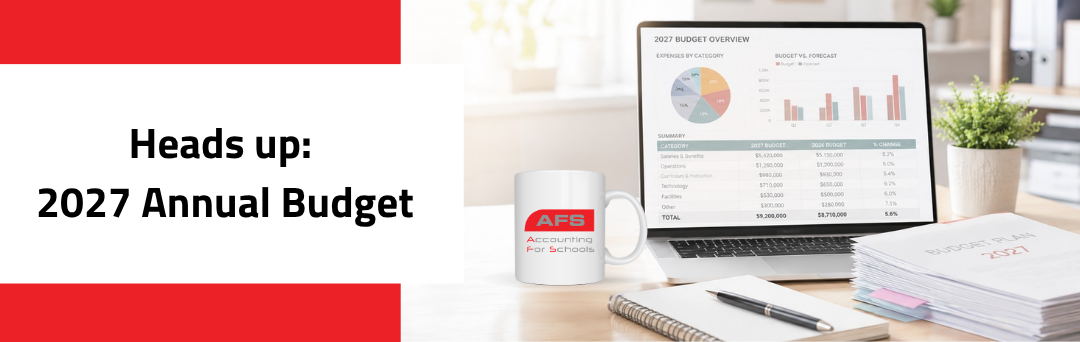
2027 Budget planning is just around the corner!


The annual budgeting process will soon be underway, so now is a good time to start planning ahead.


As soon as the Ministry of Education releases the indicative funding and entitlement notices, we'll prepare our budget templates and send out a special Budget newsletter. This will include everything you need to complete your budget, along with the latest wage calculations and any other important updates.


If you are not one of the schools we generally assist around the budget but would like us to prepare a Budget Template report for your school, please send us an email at admin@afsl.nz.


If you have any questions, please get in touch with our team on (04) 909 7729 or email admin@afsl.nz.


Budget Handbook: 


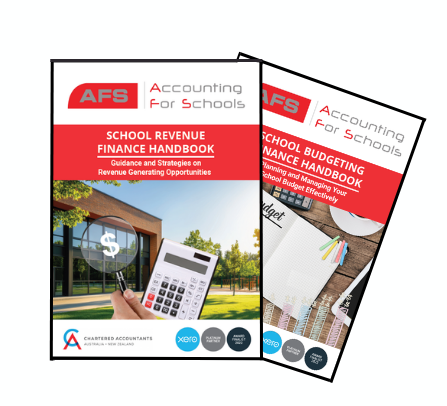
A reminder that our School Budgeting Finance Handbook is available to download from the Resources Hub section of our website.


This helpful resource provides practical guidance on the key areas of the budgeting process, including allocating resources, monitoring expenditure, and forecasting future financial needs. It also highlights important financial considerations and budgeting best practices to help schools create balanced and sustainable budgets.


AFS Resources Hub - Click here to download our Budget Handbook


IMPORTANT NOTICES

Reminder: July Operational Grant Funding Notices

If you haven't already done so, could you please upload the July operations grant reports to Google Drive or attach them to the transaction in Xero.


Should you need any guidance on how to do this, we have included our Pourato & Secure Data Portal Checklist below, which you can access by clicking the button. Please ensure all required items are uploaded (staffing entitlement, operational funding, funding summary and July PE Funding letter).

Pourato & Secure Data Portal Checklist

Provisional rolls:


Provisional rolls will be published on Pourato on 4 September. To view your provisional roll, provisional staffing entitlement and indicative funding, open the ‘rolls’ tab in Pourato and ensure 2027 has been selected in the drop-down menu. 


Provisional roll review applications will open on 7 September and close on 13 November. You can find out how to request a review by clicking the button below.

Apply for a Provisional Roll Review - Ministry of Education

Quarter 4 Operational Funding:


Quarter 4 2026 Operational Funding will be published on Pourato on 23 September and will be paid on 1 October. 


School Donations Scheme:


The school donations scheme opt-in process remains aligned with your July roll return. If you opted in to the scheme for 2027 when you completed the roll return, no further action is required.


You can view your 2027 equity index (EQI) when the 2027 provisional rolls are published on Pourato on 4 September. A small number of schools and kura whose 2027 EQI is 432 or higher will become newly eligible to opt in to the school donations scheme for 2027.


To read more information, and to access the opt-in form click the button below.

Fees and charges at school - Ministry of Education
 

TERM 3 FINANCE CHECK-IN

With Term 3 well underway, now is a good time to check in on your school's finances and see how you're tracking against your 2026 budget.


The first half of the school year rarely goes exactly as planned. Unexpected costs, staffing changes, funding updates, or projects progressing faster or slower than expected can all affect your budget.


A mid-year finance review helps confirm whether your budget still reflects your school's current circumstances and highlights any areas that may need attention before Term 4.

Im an image

A few key areas to review include:

  • Compare your actual results against your budget: Review your income and expenditure against your original budget to identify where things are tracking as expected and where adjustments may be needed.
  • Review key spending areas: Look at areas where costs may have changed, such as staffing, property, technology, or operational expenses. Identifying these changes early gives you more flexibility to respond if needed.
  • Check your funding and commitments: Ensure funding received aligns with expectations and that any conditions or supporting documentation requirements are being managed.
  • Review your cashflow position: Having a clear view of upcoming income and expenses can help when planning for significant commitments, projects, and the remainder of the school year.
  • Start thinking ahead to Term 4 and year-end: While December may seem a long way away, preparing early can make the year-end process much smoother. Keeping records accurate and up to date now can reduce pressure later.

Remember, we're here to support you throughout the year, not just during budget season.


If you'd like any help reviewing your budget, interpreting your financial reports, or discussing how things are tracking, don't hesitate to get in touch with your AFS contact. We're always happy to help where we can.


Monthly finance reports are one of the most valuable tools available to school leaders and finance teams. More than just a snapshot of your school's financial position, they provide valuable insights that can support informed decision-making, highlight emerging trends, and help keep your school on track throughout the year.


At AFS, we prepare monthly finance reports for many of the schools we work with. However, regardless of who prepares them, the real value comes from how they're used once they're in your hands. Here are six simple ways to get more value from your monthly finance reports.


1. Focus on what has changed, not just the numbers


The most useful insight each month is often not the overall result, but what has changed.

When reviewing reports, pay attention to:

  • What has increased or decreased since last month
  • Where spending is tracking differently to expectations
  • Any new or emerging trends

Looking beyond individual numbers helps highlight what may need attention and prevents important details from being missed.


2. Pay attention to budget vs actual


One of the most important parts of your report is how actual performance compares to budget.

Ask:

  • Are we on track overall for the year?
  • Which areas are over or under budget?
  • Are these timing differences or ongoing changes?

Understanding the reason behind variances helps determine whether action is needed or whether the movement is expected.


3. Look for trends over time


A single month rarely tells the full story. It is often more useful to look at:

  • Patterns across multiple months
  • Whether variances are improving or growing
  • Seasonal or term-based fluctuations

This broader view can help identify changes early and support better planning.


4. Use the commentary to support understanding


Good reporting should always include context. The commentary helps explain:

  • Why variances have occurred
  • Any one-off or timing differences
  • What is expected going forward

This reduces uncertainty and supports better decision-making by school leaders and boards.


5. Use reports to support conversations, not just compliance


Monthly reports are most powerful when they are used in discussion. They can help guide:

  • School planning and discussions
  • Board meeting conversations
  • Forward planning for staffing and resources

The goal is not just to review numbers, but to use the information to make informed decisions.


6. Ask questions and seek clarity when needed


Financial reports are most useful when they are understood and used confidently. If something in your reports doesn’t look right, a result is unexpected, or you need more context around a number, it is always worth asking questions.


Understanding what is driving changes helps schools respond early and make informed decisions.


Key takeaway


Taking the time to understand the story behind the numbers can help your school plan ahead with greater confidence and make well-informed decisions for the future.


If you have any questions about your monthly finance reports or would like to talk through how your school is tracking, please don't hesitate to get in touch with us. We're always happy to help.


 

XERO PRICING INCREASE - 1 OCTOBER 2026

Xero has announced changes to the pricing of its New Zealand subscription plans, which will take effect from 1 October 2026.


While price increases are never ideal, these changes reflect Xero’s ongoing investment in the platform and the new features it continues to introduce.


If you have a Xero subscription through Accounting For Schools, the updated pricing will automatically apply from your first billing date on or after 1 October 2026. No action is required on your part.


New Xero Pricing (Effective 1 October 2026)

  • Xero Grow increases from $83 to $89 + GST per month

As a Xero Platinum Partner, we continue to pass our partner discount on to our clients. With this discount applied, your monthly subscription prices through Accounting For Schools from  1 October 2026 will be:

  • Xero Grow: $64 + GST per month (previously $60 + GST)

For more information about Xero's pricing changes, click the button below.

Xero Pricing Changes from 1 October 2026
 

XERO TIP OF THE MONTH: USE REFERENCE FIELDS CONSISTENTLY FOR EASIER SEARCHING

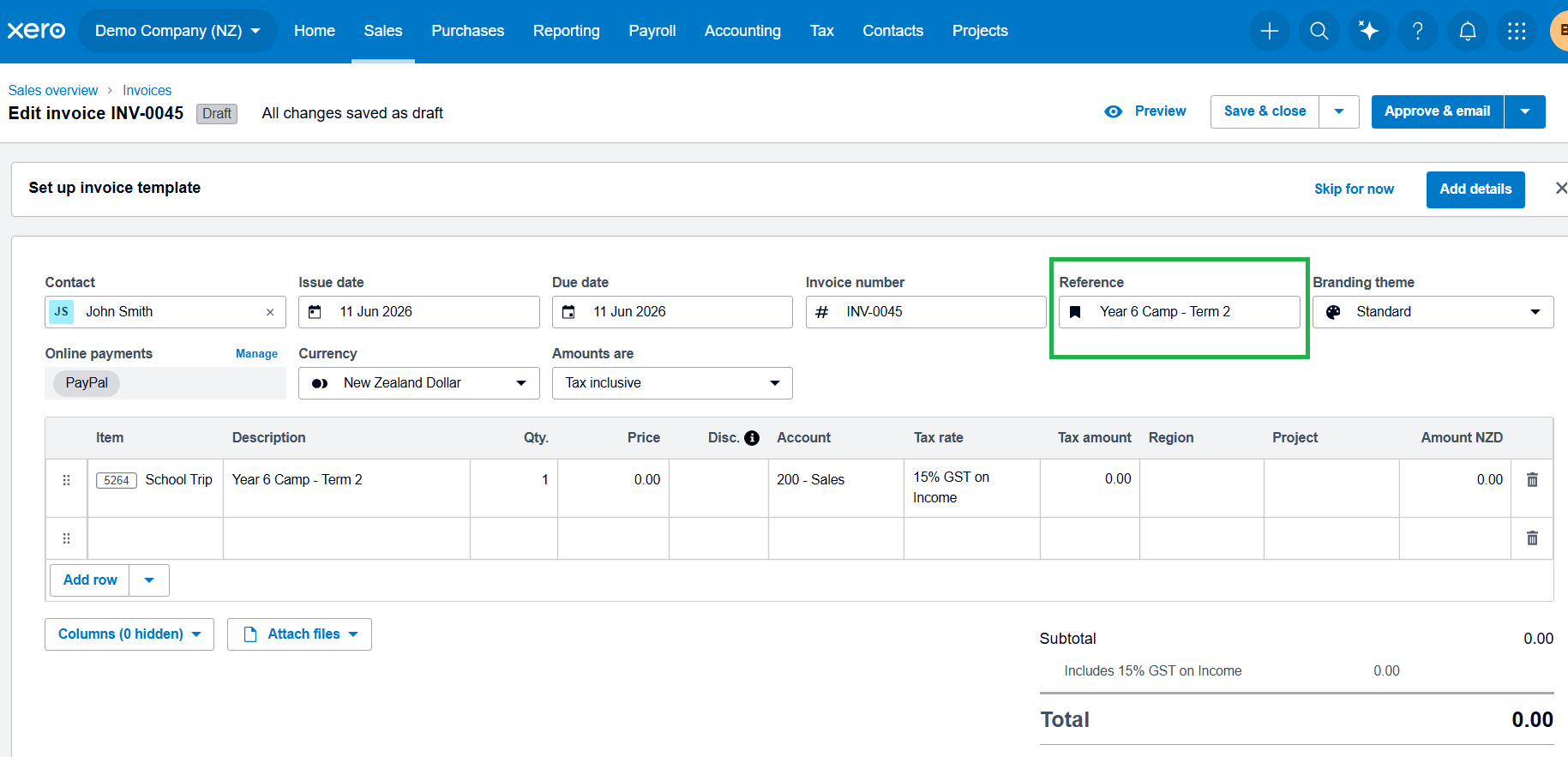
A simple but highly effective habit in Xero is consistently using the reference field when entering invoices, bills, or bank transactions. While it’s often overlooked, it can make a big difference when it comes to finding and identifying transactions later on.


For schools managing a high volume of activity such as trips, donations, suppliers, and term-based billing - consistent reference naming helps keep everything easier to track and search.


How to use the Reference field in Xero:


1. When creating an invoice or bill, locate the Reference field

2. Enter a clear and consistent description, such as:

  • “Term 2 Trip – Year 6 Camp”
  • “Stationery Order – June 2026”
  • “Donation – PTA Fundraiser”

3. Save or approve the transaction as normal

4. Use the search bar later in Xero to find transactions by reference


Using consistent references makes it much easier to locate specific transactions quickly, especially when reviewing reports, answering queries, or preparing for audits. It also improves clarity across the finance team and supports more efficient reconciliation and reporting.


FAREWELL TO NERISSA HEYRANA

Im an image

We would like to let you know that Nerissa Heyrana left Accounting For Schools last Friday to return home to the Philippines to spend time with her family.


Nerissa has been a valued member of our team for the past four and a half years, and during that time she has built strong and lasting relationships with the schools she has supported.


We have greatly appreciated her dedication, commitment and care in looking after our school clients, and she will certainly be missed by all of us at Accounting For Schools. 

We wish Nerissa and her family all the very best for the future and hope she enjoys this special time back home.


Your ongoing support


We have arrangements in place to ensure a smooth transition and that you continue to receive the support you need. For any queries following Nerissa's departure:

  • Technical accounting queries: Ben Duflou, Dominique McCrostie or Sunil Hooda
  • Everyday accounting queries: Your school's usual Client Manager
  • Xero, Hubdoc & ApprovalMax specific queries: Harpreet Singh

We appreciate your understanding during this transition and look forward to continuing to support your school. 


HEADING TO NZPF ICP 2026? COME AND SAY HELLO!

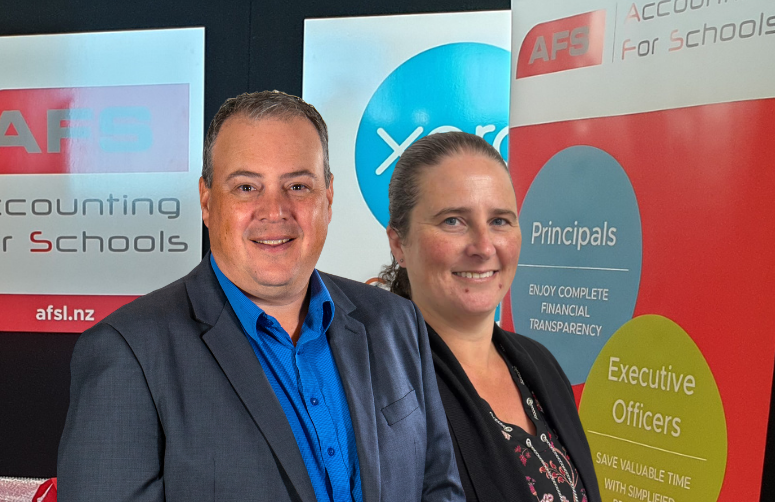
We're looking forward to catching up with many of you at the NZPF-hosted ICP 2026 Convention from 16-18 September. If you're attending, make sure you stop by Booth 86 and say hello.


Ben Duflou and Dominique McCrostie will be at the stand throughout the conference, ready to answer your questions, share practical insights, and chat about your school's finances.


Whether you'd like to discuss your upcoming budget, ask a finance question, or simply catch up, we'd love to see you.

Im an image

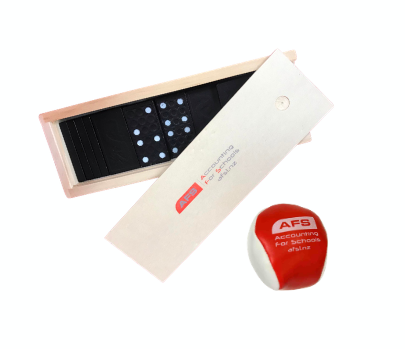
And, of course, no AFS booth would be complete without lots of goodies! We'll be bringing plenty with us, including our practical school finance handbooks, AFS reusable toggle bags, fan-favourite mint choccys and lots more. Make sure you stop by and see what's up for grabs!


We know conferences are busy, so if you have a few minutes between breakout sessions, we'd love the chance to catch up in person. We hope to see you at Booth 86!

Im an image
Im an image
Im an image
Im an image
 
 
AFS are a Xero Platinum Partner
AFS are sponsors of NZPF
Go to the AFS website

271 Willis Street, Wellington 6011

P: 04-909-7729  l  P: 0800-275-237  l  

E: admin@afsl.nz  l  W: afsl.nz

Facebook LinkedIn

Unsubscribe